
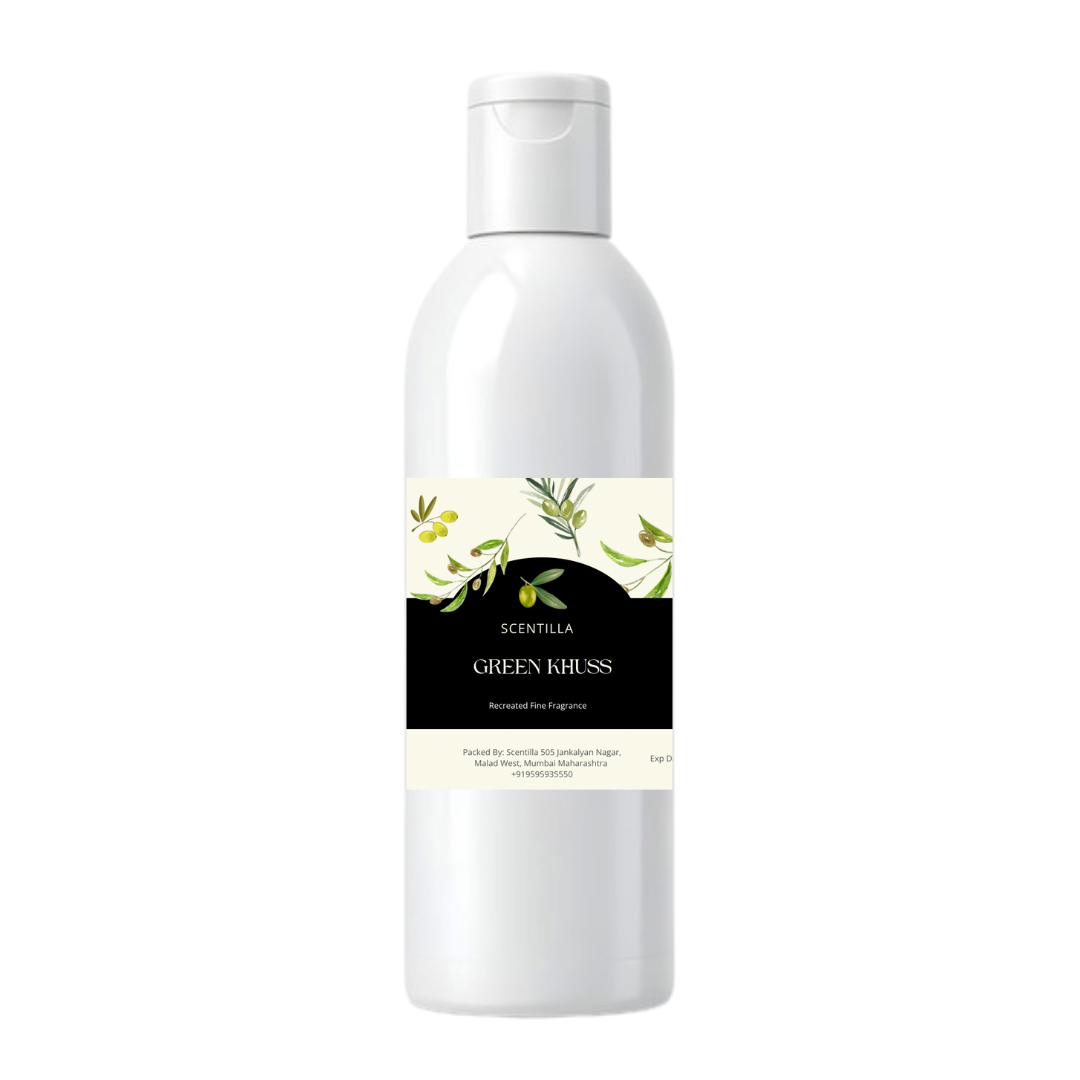
GREEN KHUSS
₹455.00 – ₹12,155.00
GREEN KHUSS – A unique, fresh scent with green, herbal, and earthy notes.
The Lively Top Notes: Lemon, Lime, and Bergamot
Top notes are the initial impression a fragrance makes, often comprising lighter, more volatile ingredients that evaporate quickly and introduce the scent to the wearer. Lemon, lime, and bergamot are prime examples of such notes, lauded for their zesty and invigorating qualities. These citrus-infused top notes serve as an olfactory overture, setting the stage for the more complex middle and base notes that follow.
Lemon, recognized for its sharp, clean scent, has long been associated with freshness and energy. The historical use of lemon in perfumery dates back to ancient times when its essential oil was extracted for its aromatic and medicinal properties. Its invigorating nature is a staple in many summer fragrances, instantly providing a sense of vitality and alertness.
Lime, while similar to lemon in its citrusy profile, offers a slightly sweeter and more tart fragrance. The use of lime in scents can be traced back to tropical regions where it was prized for its bright and uplifting aroma. Lime essential oil is often used to impart a crisp, green freshness that complements and enhances the other notes in a fragrance blend.
Bergamot, a less common but equally essential component, bridges the gap between the lively, citrus top notes and the aromatic, bitter undertones. Originating from the bergamot orange, this particular note adds complexity and depth with its unique, slightly floral twist. Historically, bergamot has played a crucial role in the traditional formulation of Eau de Cologne, underlining its enduring appeal in the fragrance world.
These three citrus notes, when combined, create a dynamic and refreshing sensory experience. Their interplay delivers an initial burst of zest that captivates the senses, ensuring a memorable and positive first impression. Iconic perfumes such as Dolce & Gabbana’s Light Blue and Chanel’s Pour Monsieur exemplify the masterful use of lemon, lime, and bergamot, showcasing their ability to invigorate and uplift the spirit. Through their historical significance and enduring popularity, these top notes continue to epitomize the vibrancy and allure of citrus fragrances.
The Heartbeat of the Scent: Middle Notes of Rose, Geranium, Cedar, Black Pepper, Nutmeg, Labdanum, Guaiac Wood, and Clary Sage
The middle notes, often referred to as the heart notes, are essential in perfumery for their ability to add depth and complexity to a fragrance. These notes emerge once the top notes evaporate, forming the core of the scent and providing a lingering signature that defines its character.
Among the floral middle notes, rose and geranium are prominently featured. The rose, with its timeless elegance, imparts a rich, sweet scent that is both romantic and sophisticated. Geranium offers a more vibrant and slightly more astringent profile with green, aromatic nuances that balance the warmth of rose.
Woodsy elements like cedar and guaiac wood contribute a grounded, earthy backbone to the fragrance. Cedar, known for its dry, resinous aroma, complements the smokiness and slight sweetness of guaiac wood, creating a robust, woody tableau.
The introduction of spices, such as black pepper and nutmeg, adds an intriguing depth to the heart notes. Black pepper infuses a hint of pungency and warmth, stirring the senses with its sharp, spicy profile. Nutmeg, on the other hand, delivers a sweet, warm, and slightly nutty fragrance, fostering a cozy and inviting feel.
Labdanum and clary sage, although less commonly discussed, play crucial roles in rounding out the heart notes. Labdanum, with its intense, leathery, and ambery scent, introduces a resinous richness. Clary sage, bringing a fresh, herbaceous, and slightly musky scent, adds an element of purity and tranquility to the mix.
The interplay of these middle notes results in vibrant yet harmonious fragrances. Each element contributes its unique touch, seamlessly blending to sustain the scent profile long after the initial top notes have dissipated. The resilience and prominence of middle notes make them indispensable in perfumery, ensuring that the fragrance maintains its allure and complexity throughout its wear.
Examples of perfumes showcasing these diverse middle notes include classic compositions and modern blends, each creatively balancing floral, spicy, and woody elements to achieve an unforgettable olfactory experience.
“`html
Anchoring the Scent: Base Notes of Vetiver, Patchouli, Sandalwood, Vanilla, and Oakmoss
The essence of any lasting fragrance lies in its base notes, which provide depth and longevity. Central to this discussion are vetiver, patchouli, sandalwood, vanilla, and oakmoss, each contributing unique characteristics to the olfactory experience.
Vetiver, known as the “oil of tranquility,” exudes a rich, earthy aroma with smoky undertones. Extracted from the roots of the Vetiveria zizanioides grass through steam distillation, vetiver has historically been utilized in traditional medicine and incense. Its grounding scent firmly anchors the fragrance, creating a serene and stable foundation.
Patchouli offers an equally profound yet distinct olfactory profile. Derived from the leaves of the Pogostemon cablin plant, the oil undergoes a fermentation process before distillation, resulting in a deep, woody sweetness with hints of spice. This base note, often associated with the counterculture of the 1960s, brings warmth and richness, enhancing the overall complexity of a fragrance.
Sandalwood, revered for its creamy, woody aroma, has been an integral component of perfumery and spiritual practices for over 4000 years. The oil is obtained through steam distillation of the heartwood of Santalum trees. Sandalwood’s soft, enduring fragrance adds a smooth, luxurious quality, harmonizing with other notes to elevate the scent’s sophistication.
Vanilla, a universally adored scent, introduces a sweet, comforting dimension to the fragrance palette. Sourced from the pods of the Vanilla planifolia orchid, the extraction process involves curing and drying, followed by a lengthy maturation period. Its creamy, balsamic nuances blend seamlessly with diverse notes, imparting a velvety finish that enhances stability and warmth.
Oakmoss, harvested from lichens growing on oak trees, brings a distinctive, mossy note with earthy, slightly leather-like nuances. The extraction, typically through solvent extraction, yields a product cherished for its fixative properties. Oakmoss contributes a natural, forest-floor element, adding depth and complexity to the aromatic composition.
These base notes not only provide endurance but also serve as crucial connectors that bridge the volatile top notes and the heart’s nuances. The integration of vetiver, patchouli, sandalwood, vanilla, and oakmoss within various fragrance families demonstrates their versatility and indispensable role in crafting an enduring and well-balanced scent.
“`
Crafting the Perfect Blend: The Art of Fragrance Composition
Creating a harmonious fragrance involves more than merely combining scents; it is an intricate art form that engages the perfumer’s expertise and artistic sensibility. The journey begins with conceptualization, where the perfumer envisions the essence they seek to capture. During this phase, they meticulously select top, middle, and base notes that, together, will evolve into a captivating symphony of scents.
Top notes, the first impression of a fragrance, are oftentimes light and volatile, designed to capture immediate interest. They typically evaporate quickly, giving way to the middle notes, or the heart of the fragrance. These middle notes emerge gradually to establish the character and theme. As these notes diminish, the long-lasting base notes unfold, providing the foundation and depth. The balance and interaction among these layers ensure the fragrance is dynamic and multi-dimensional.
The relationships among different notes are pivotal. Understanding how molecular compositions influence scent longevity and interaction helps perfumers achieve the desired olfactory outcome. For instance, a citrus top note might harmonize with a floral heart and a woody base to deliver a well-rounded scent experience. Mastery of this interplay allows perfumers to innovate continually, crafting fragrances that are both unique and compelling.
Fragrance families classify scents into broader categories such as florals, orientals, chypres, and fougères, each with distinct characteristics. This framework guides the blending process, ensuring each creation aligns with the intended family while achieving an exquisite balance of harmony and contrast.
In recent years, perfumery has observed a shift towards transparency and sustainability, with a growing preference for natural and responsibly sourced ingredients. As individuals seek personalized experiences, niche perfumers are embracing bespoke fragrance creation and wearable, occasion-specific scents.
Selecting and wearing a fragrance is an intimate endeavor. It’s crucial to consider personal taste and the contexts in which the fragrance will be worn. Sampling fragrances on the skin allows one to experience the journey from top to base notes, ensuring a perfect, harmonious match for any occasion.
| Quantity | 25 G, 100 G, 1 KG |
|---|
Related products
-
Fine Fragrances
DRAKKAR
₹5,415.00Original price was: ₹5,415.00.₹2,865.00Current price is: ₹2,865.00. Add to cart Buy Now -
Fine Fragrances
BON BON
₹9,148.00Original price was: ₹9,148.00.₹4,840.00Current price is: ₹4,840.00. Add to cart Buy Now -
Fine Fragrances
ARMANI
₹13,179.00Original price was: ₹13,179.00.₹6,973.00Current price is: ₹6,973.00. Add to cart Buy Now


Reviews
There are no reviews yet.