
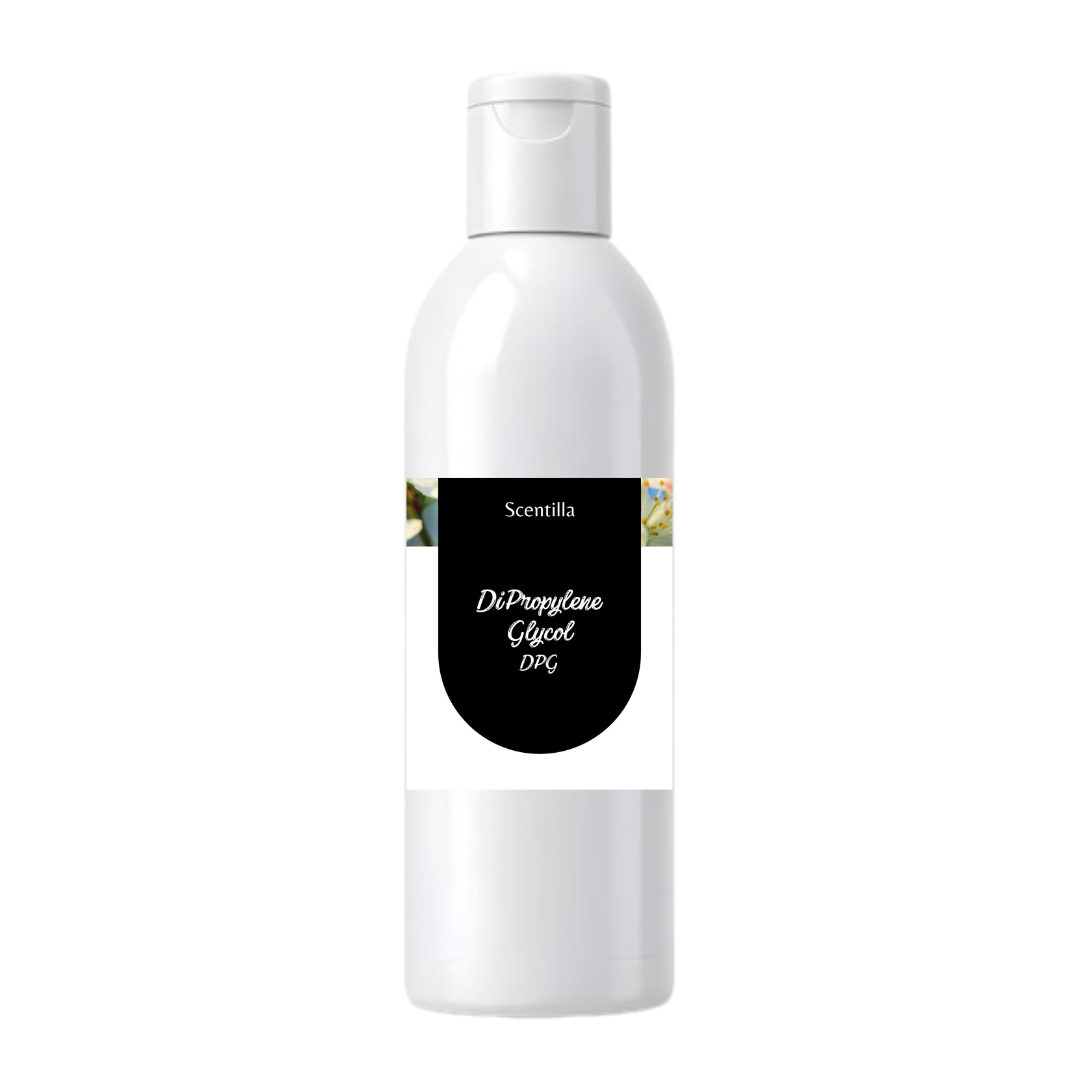
Introduction to Di Propylene Glycol (DPG)
Di Propylene Glycol (DPG) is a versatile organic compound widely utilized across numerous industries, with a distinct prominence in the realm of perfumery. Its chemical structure, (C3H8O2)2, defines DPG as a member of the glycol family, featuring two hydroxyl groups (-OH) which contribute to its high solvency capabilities. This bifunctionality enables DPG to blend seamlessly with both water and oil-based substances, making it a critical ingredient in fragrance formulations.
DPG is synthesized through a multi-step process starting with the hydration of propylene oxide. It’s commercially available in two primary grades: regular and fragrance. The latter is highly purified to meet the stringent requirements of the personal care and cosmetics industries. Its physical state at room temperature is a colorless, almost odorless, and slightly viscous liquid, with excellent solubility properties that facilitate its integration into diverse formulations.
In addition to its pivotal role in perfumery, where it acts as a solvent and carrier for fragrance oils, DPG finds myriad applications in other sectors. It serves as a stabilizer in pharmaceuticals, a humectant in cosmetics, and a plasticizer in polymer industries. Its ability to effectively dissolve and blend with various substances accentuates its multifunctionality and industrial importance.
Regarding its interaction with other substances, DPG is particularly noted for its compatibility with a broad spectrum of ingredients. This compatibility ensures that fragrances remain stable and effective, enhancing the longevity and consistency of the scent profile. DPG’s low toxicity and skin-friendly nature further elevate its utility, underscoring why it remains a cornerstone in the formulation of contemporary perfumes and fragrances.
Functions of DPG in Fragrance Formulation
Di Propylene Glycol (DPG) serves several crucial functions in the formulation of perfumes and fragrances, each contributing to the overall quality and performance of the final product. Primarily, DPG acts as an effective solvent and carrier for essential oils and aromatic compounds. This functionality is particularly important as it ensures that the various scent components blend seamlessly and remain stable over time, preventing any alteration or degradation of the fragrance.
One of the key advantages of using DPG in fragrance formulation is its capability to enhance both the longevity and intensity of the scent. As a diluent, DPG helps to control the release of the fragrance by slowing down the evaporation rate of the volatile aromatic compounds. This deceleration is significant because it allows the scent to linger longer on the skin or in the ambient air, thereby delivering a prolonged olfactory experience.
In addition to prolonging the duration of the fragrance, DPG also contributes positively to the perceived fragrance profile. By moderating the evaporation rate, it ensures a more balanced release of the various fragrance notes over time. This balanced evaporation is essential for maintaining the integrity of the top, middle, and base notes, allowing the full complexity of the fragrance to be appreciated in a harmonious manner. Without DPG, fragrances might release too quickly, leading to an unbalanced and fleeting scent experience.
Moreover, DPG’s role as a solvent enables it to dissolve a wide range of aromatic compounds which might not be soluble in water or other carriers. This solubilizing ability ensures a uniform distribution of scent molecules within the formulation, preventing the fragrance from changing its profile during storage or application. Thus, DPG is indispensable in ensuring that consumers experience a consistent and high-quality fragrance each time they use the product.
Overall, the incorporation of Di Propylene Glycol in fragrance formulations not only ensures stability and consistency but also enhances the longevity, intensity, and balance of the scent, making it an essential component in the art and science of perfumery.
Advantages and Safety of Using DPG in Perfumes
Di Propylene Glycol (DPG) is a pivotal ingredient in the formulation of perfumes and fragrances, owing to its numerous technical and consumer-oriented advantages. A key benefit of DPG is its non-toxic and non-irritant nature. This makes it exceptionally suitable for products designed for direct skin contact, offering a safer alternative to more aggressive solvents that may cause irritation or adverse reactions. Furthermore, DPG’s compatibility with a broad spectrum of essential oils and fragrances enhances its use in a variety of personal care applications.
From a technical standpoint, DPG excels in several areas. It is prized for its superior solvent properties, which facilitate the dissolution of aromatic compounds, ultimately enabling the creation of more consistent and stable fragrance formulations. Compared to other common solvents, such as alcohol or ethanol, DPG is not only more cost-effective but also delivers enhanced performance in terms of fragrance longevity and stability. The substance’s high boiling point and low vapor pressure also make it less volatile, reducing the risk of evaporation and ensuring that the scent remains potent for an extended period.
Additionally, DPG’s versatility extends beyond its solvent capabilities. It can function as a carrier for certain active ingredients, further expanding its scope of application within the cosmetic industry. Its ability to blend seamlessly with other ingredients without altering their properties underscores its value as an essential component in complex formulations.
Safety assessments and regulatory approvals play a crucial role in reinforcing consumer confidence in products containing DPG. Comprehensive evaluations conducted by prominent regulatory bodies, such as the FDA and the International Fragrance Association (IFRA), have validated the safety profile of DPG. Their endorsements mean that products incorporating DPG adhere to stringent safety standards, mitigating any potential risks to consumers. These validations ensure that the use of DPG not only meets industry norms but also fosters trust and reliability in the end products.
Future Trends and Innovations Involving DPG in Fragrances
The fragrance industry is continuously evolving, and Di Propylene Glycol (DPG) is playing a pivotal role in shaping its future. One of the foremost trends is the push towards sustainability, as consumers increasingly demand eco-friendly and natural ingredients. Researchers are actively exploring ways to optimize DPG formulations, aiming to enhance its biodegradability and reduce its environmental footprint. Such optimizations are not only pivotal for environmental conservation but also cater to the growing market for green and sustainable products.
Innovations in DPG applications are also making significant strides. Cutting-edge technologies, such as encapsulation techniques, are being explored to improve the release and longevity of fragrances. Encapsulation allows for controlled and prolonged release of scents, providing consumers with a lasting aromatic experience. Additionally, advancements in the field of nanotechnology are promising new ways to incorporate DPG into micro-structures, further enhancing its performance in fragrance delivery.
Emerging technologies aside, the health-conscious movement among consumers is another driving force behind the future use of DPG in the perfume industry. There is an increasing emphasis on hypoallergenic formulations, and DPG’s low toxicity profile makes it a preferred solvent in crafting safer, skin-friendly fragrances. This aligns well with consumers’ inclination towards products that promise both safety and indulgence.
Market trends also indicate a rising preference for personalized and customizable fragrances. DPG’s versatility as a solvent supports the development of bespoke perfumes, tailored to individual preferences. This personalization trend is further bolstered by advancements in AI and machine learning, which are being utilized to predict consumer preferences and create unique scent profiles.
In essence, the future of DPG in the fragrance industry looks promising. As research continues to optimize its use and emerging technologies enhance its applications, DPG is set to meet the evolving demands of the modern consumer. Focused on sustainability, health consciousness, and personalization, the next generation of DPG-based fragrances is poised to deliver exceptional olfactory experiences.
| Quantity | 25 G, 100 G, 500 G, 1 KG, 5 KG |
|---|
Related products
-
DIY Perfume Supplies
Reed Diffuser Base (Wooden Diffuser Car/Home)
Rated 0 out of 5₹149.00 – ₹5,999.00 Select options This product has multiple variants. The options may be chosen on the product page -
DIY Perfume Supplies
Diethyl Phthalate (DEP)
Rated 0 out of 5₹85.00 – ₹4,555.00 Select options This product has multiple variants. The options may be chosen on the product page -
DIY Perfume Supplies
Iso E Super
Rated 0 out of 5₹85.00 – ₹6,099.00 Select options This product has multiple variants. The options may be chosen on the product page -
DIY Perfume Supplies
Galaxolide 50
Rated 0 out of 5₹210.00 – ₹12,555.00 Select options This product has multiple variants. The options may be chosen on the product page


Reviews
There are no reviews yet.