
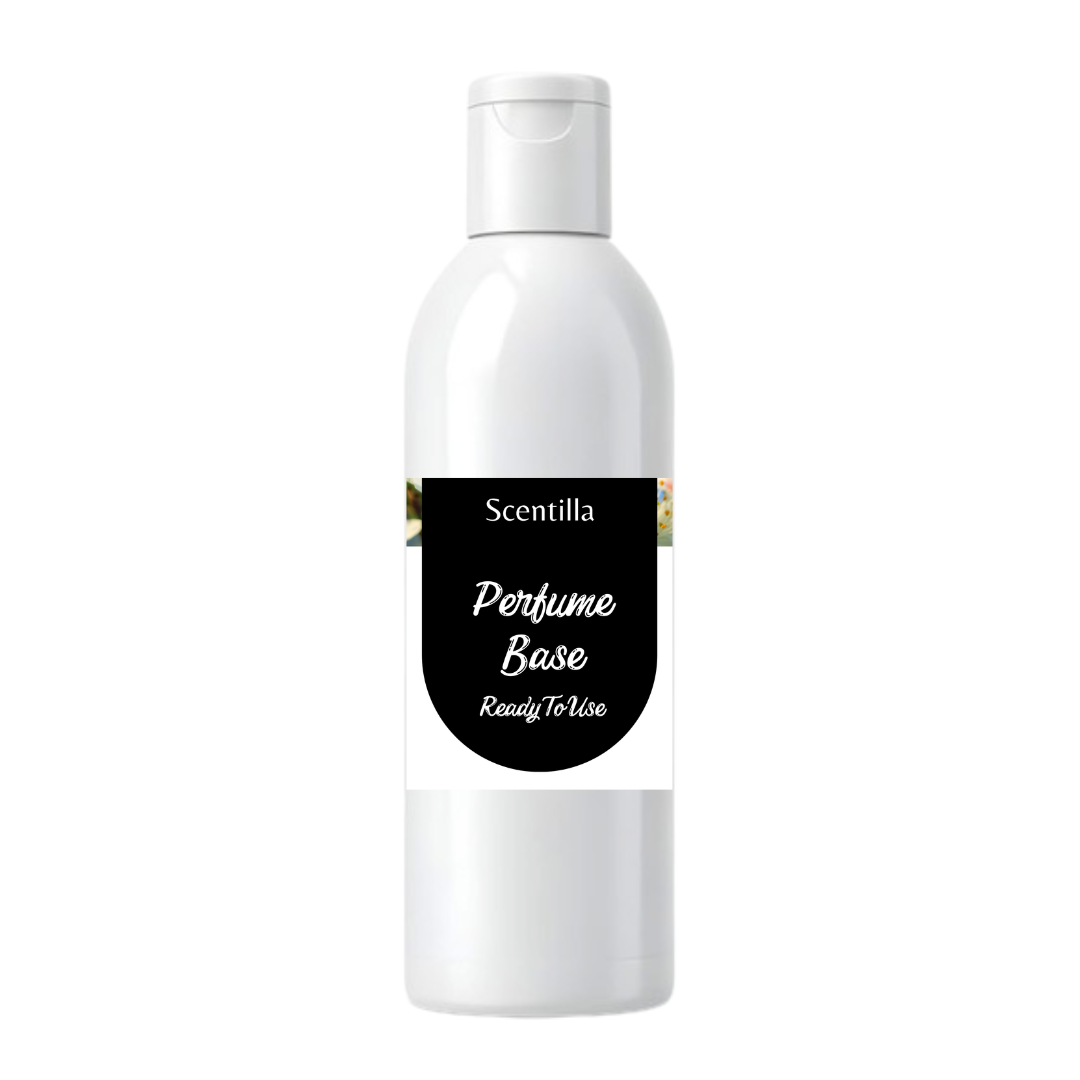
What is a Perfume Base?
A perfume base is a pre-mixed solution, fundamental to the creation of fragrances. The purpose of a perfume base is to serve as the primary carrier for essential oils and aromatic compounds, facilitating their dispersion and stability within a fragrance product. Essentially, these bases act as the backbone of a perfume, providing a vehicle for the scent elements to merge harmoniously and yield the final aromatic experience.
The composition of a perfume base typically includes a blend of solvents, such as alcohol, fixatives, and often water. Alcohol is a crucial solvent in this formulation because it works effectively in dissolving oils and other aromatic ingredients. Additionally, it promotes the evaporation process, allowing the fragrance to release its top, middle, and base notes sequentially when applied to the skin. Fixatives play an indispensable role by enhancing the longevity and fixation of the fragrance components. They ensure the scent persists over time, making it more enduring and impactful. Water, although not always a mandatory ingredient, is sometimes incorporated to adjust the concentration and ensure the appropriate balance and texture of the perfume.
The importance of perfume bases in the fragrance creation process cannot be overstated. They provide a stable and consistent foundation, allowing perfumers to focus on blending various scent components without worrying about the structural integrity of the final product. Moreover, standardized perfume bases ensure that the resulting perfume maintains uniform quality and performance, batch after batch. Without a well-formulated base, the perfume would struggle to achieve the desired olfactory characteristics and stability, making the base an indispensable component in the art of fragrance design.
The Role of Alcohol in Perfume Bases
Alcohol is an indispensable element in the formulation of perfume bases, serving various essential functions that contribute to the overall performance and stability of a fragrance. At its core, alcohol acts as an effective solvent for essential oils and aromatic compounds. These oils, which are the primary carriers of scent, do not readily dissolve in water. Alcohol, notably ethanol, provides a medium where these oils can be uniformly suspended, ensuring the even distribution of the fragrance components.
Another pivotal role of alcohol in perfume bases is its impact on the evaporation rate. When applied to the skin, the alcohol in the perfume begins to evaporate, which aids in the dispersion of the fragrance molecules into the air. This rapid evaporation process is critical because it allows the top notes—the first scents that are perceived upon application—to be immediately noticeable, setting the stage for the middle and base notes to follow. Therefore, alcohol not only facilitates the release of these initial notes but also enhances the overall scent experience.
In addition to its solvent and evaporation properties, alcohol plays a vital role in the longevity of a fragrance on the skin. By promoting a consistent release of the scent, it helps maintain the perfume’s presence over time. This ensures that the fragrance remains perceptible for hours, improving its efficacy and user satisfaction. Ethanol stands out in perfumery due to its purity and compatibility with skin, minimizing potential irritations that might occur with other types of alcohol.
Various types of alcohol can be employed in perfume bases, each offering distinct benefits. Ethanol, for instance, is favored for its relatively neutral scent profile, which complements and enhances the integrity of the essential oils without altering their characteristics. Other alcohols, such as isopropyl alcohol, may be used for specific formulations but are less common due to their potent odor and less favorable impact on skin compatibility.
Fixatives: Enhancing Longevity and Stability in Perfumes
In the intricate craft of perfumery, fixatives play a pivotal role in ensuring that a fragrance remains perceptible on the skin for an extended period. Essentially, fixatives are substances integrated into perfume bases to amplify the persistence and stability of the scent. By slowing down the evaporation rate of the more volatile components, they help to maintain the structural integrity of the fragrance, offering a more prolonged aromatic experience.
Common fixatives can be divided into two categories: natural and synthetic. Natural fixatives include materials like musk, which is highly prized for its strong, long-lasting scent characteristics. Additionally, balsams and resinous compounds, such as benzoin and labdanum, are frequently employed. These natural substances not only contribute to the longevity of the aroma but also introduce a rich, warm depth to the overall scent profile.
On the synthetic front, molecules like Ambroxan and Iso E Super are widely employed as they offer consistency and stability that might be more challenging to replicate with natural ingredients alone. These synthetic fixatives are engineered to sustainably blend with other fragrance components, ensuring a prolonged diffusion of the scent.
The significance of fixatives in perfumery cannot be overstated. Without fixatives, the lighter, more volatile elements of a perfume, such as top notes, would dissipate rapidly, leading to an unbalanced and fleeting aromatic experience. Fixatives work by chemically binding with these volatile compounds, gradually releasing them and thereby maintaining the harmonious evolution of the fragrance from first spray to dry down.
Conclusively, understanding and utilizing appropriate fixatives is crucial for the development of a balanced and enduring perfume. By meticulously selecting either natural or synthetic fixatives, perfumers can ensure that their creations captivate and linger, resonating with the wearer’s senses throughout the day.
Creating Ready-to-Use Perfume Bases: A Step-by-Step Guide
Creating a ready-to-use perfume base requires a meticulous approach to ensure the final product is both effective and pleasant. This guide will walk you through the essential steps, starting with the selection of the right type of alcohol. Ethanol, commonly used in perfumery, serves as an ideal solvent for dissolving aromatic compounds, thus releasing the fragrance when applied. It is crucial to use high-proof, laboratory-grade ethanol to avoid impurities that might alter the scent. Denatured alcohol, a popular alternative, is treated to be undrinkable but retains its effective solvent properties.
Next, choosing appropriate fixatives is essential. Fixatives are substances that stabilize the volatile components of the fragrance, prolonging its longevity. Some natural options include resins like benzoin or myrrh, wood bases like sandalwood, and ambergris. Synthetic fixatives such as musk and iso e super are also widely available and offer consistency in results. The choice of fixative will depend on the desired fragrance profile and longevity.
The role of water in the perfume base is often underestimated. Water acts as a diluent, moderating the intensity of the fragrance and ensuring it is not overwhelmingly strong. Distilled water should be used to prevent any impurities from affecting the scent. In many formulations, perfumers often maintain an alcohol-to-water ratio of 70% alcohol to 30% water, although this can vary depending on the fragrance components used.
Blending these components requires a careful balance. Begin with a small test batch to refine the proportions. Gradually add the fixative to the alcohol, ensuring even distribution before incorporating water. This method ensures each component is thoroughly mixed, preventing separation or layering. An accurate scale is recommended for precise measurements.
Storage of the finished perfume base is equally critical. Use dark, airtight glass bottles to protect the mixture from light and air, which can lead to degradation over time. Store in a cool, dry place to maintain the integrity of the perfume.
Finally, prioritize safety. Work in a well-ventilated area, wear protective gear like gloves and goggles, and be aware of any potential allergic reactions the ingredients may cause. By following these steps, both novice and experienced perfumers can create effective and pleasant-smelling perfume bases.
| Size | 50 ML, 100 ML, 500 ML, 1 LTR, 5 LTR, 10 LTR, 20 LTR |
|---|
Related products
-
DIY Perfume Supplies
Reed Diffuser Base (Wooden Diffuser Car/Home)
₹149.00 – ₹5,999.00 Select options This product has multiple variants. The options may be chosen on the product page -
DIY Perfume Supplies
Iso E Super
₹85.00 – ₹6,099.00 Select options This product has multiple variants. The options may be chosen on the product page -
DIY Perfume Supplies
Tonalide
₹215.00 – ₹2,999.00 Select options This product has multiple variants. The options may be chosen on the product page -
DIY Perfume Supplies
Galaxolide 50
₹210.00 – ₹12,555.00 Select options This product has multiple variants. The options may be chosen on the product page


Reviews
There are no reviews yet.